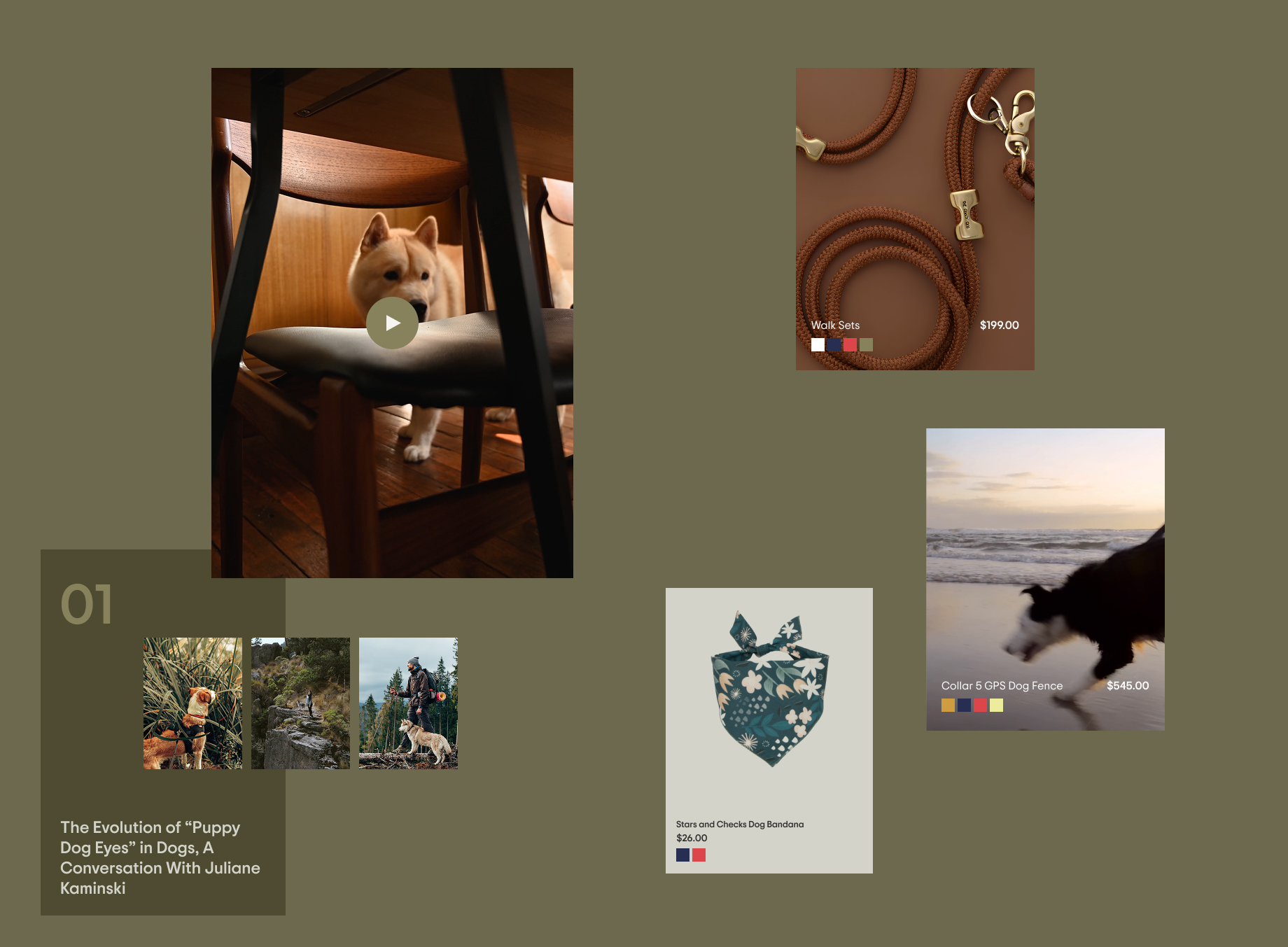
Online store of dog supplies
• +25% potential PDP conversion rate lift
How I redesigned a lifestyle dog brand into a luxury-perceived, conversion-ready and testable DTC system.
Context
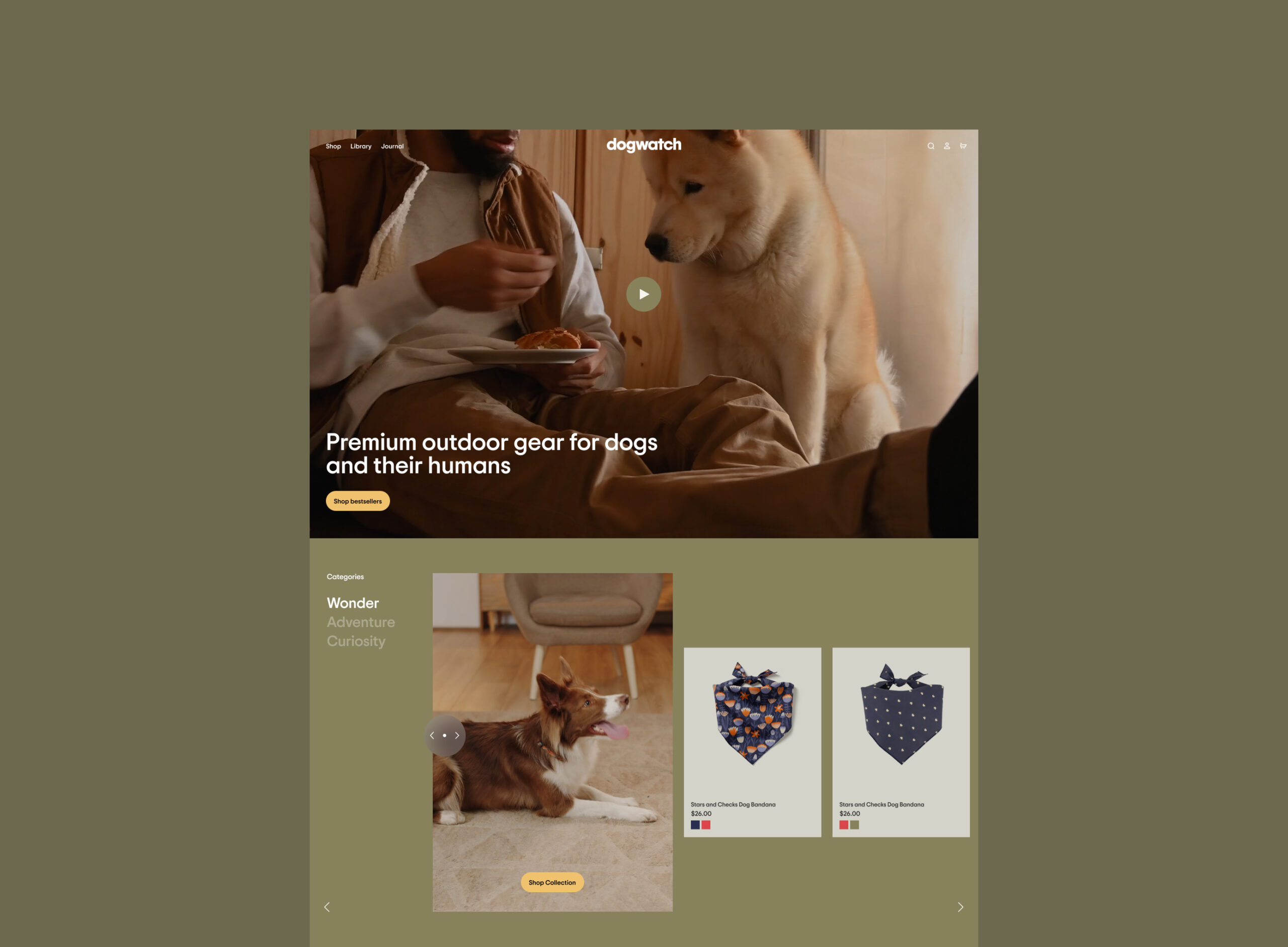
Dogwatch is a premium outdoor gear brand for dogs and their owners. The original request was simply to “make it beautiful.” The brand already had strong photography and atmosphere, but the store lacked clear product hierarchy, testing logic, and performance structure. It looked aesthetic, yet it was not engineered for measurable growth.
Problem
The homepage felt visually appealing but not conversion-driven. The PDP was not structured for paid traffic or first-time visitors, and there was no embedded testing framework inside the design. Product discovery relied more on imagery than on buying logic, and overall brand perception sat in a mid-premium zone rather than a true luxury position.
What I owned
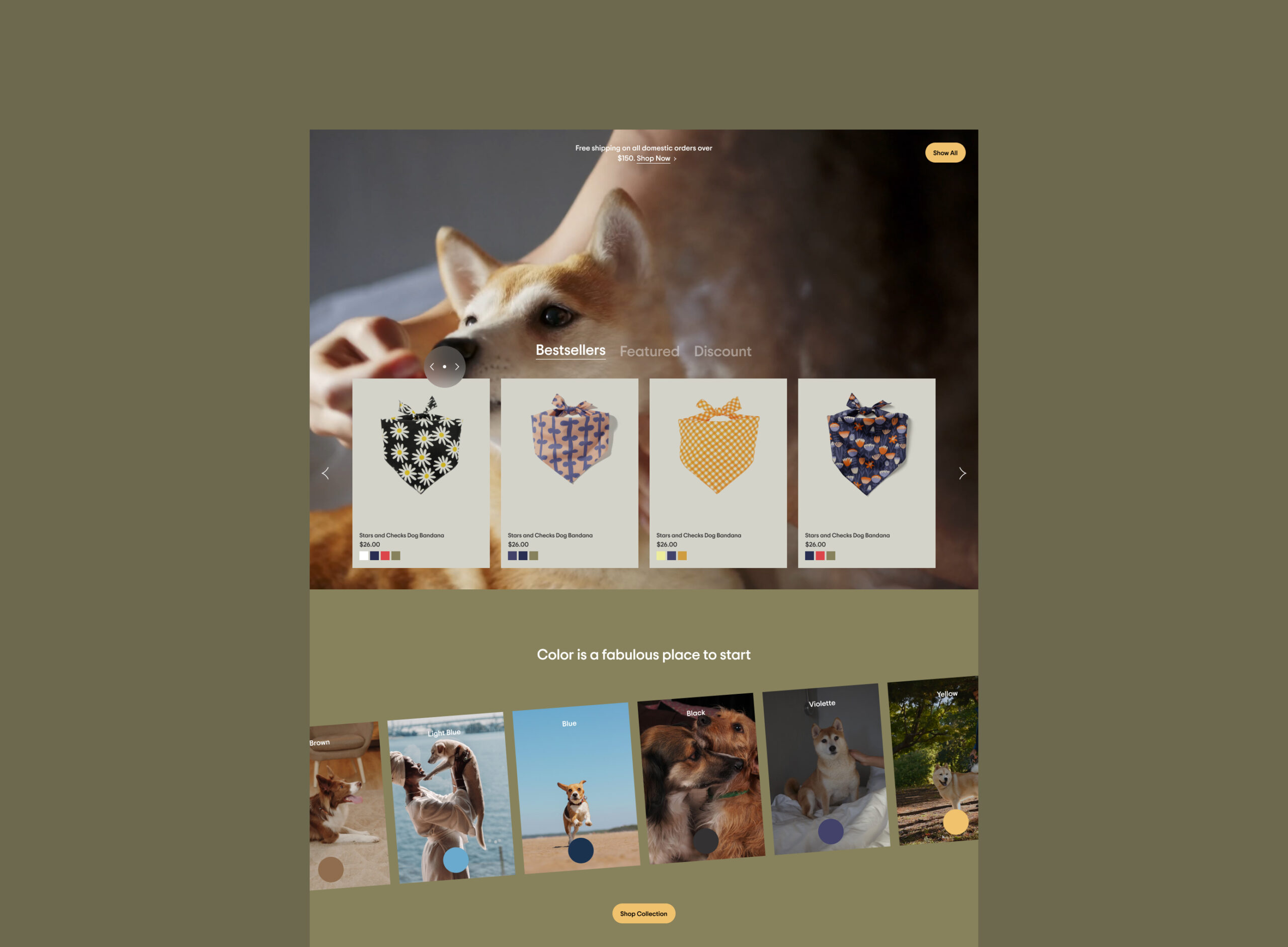
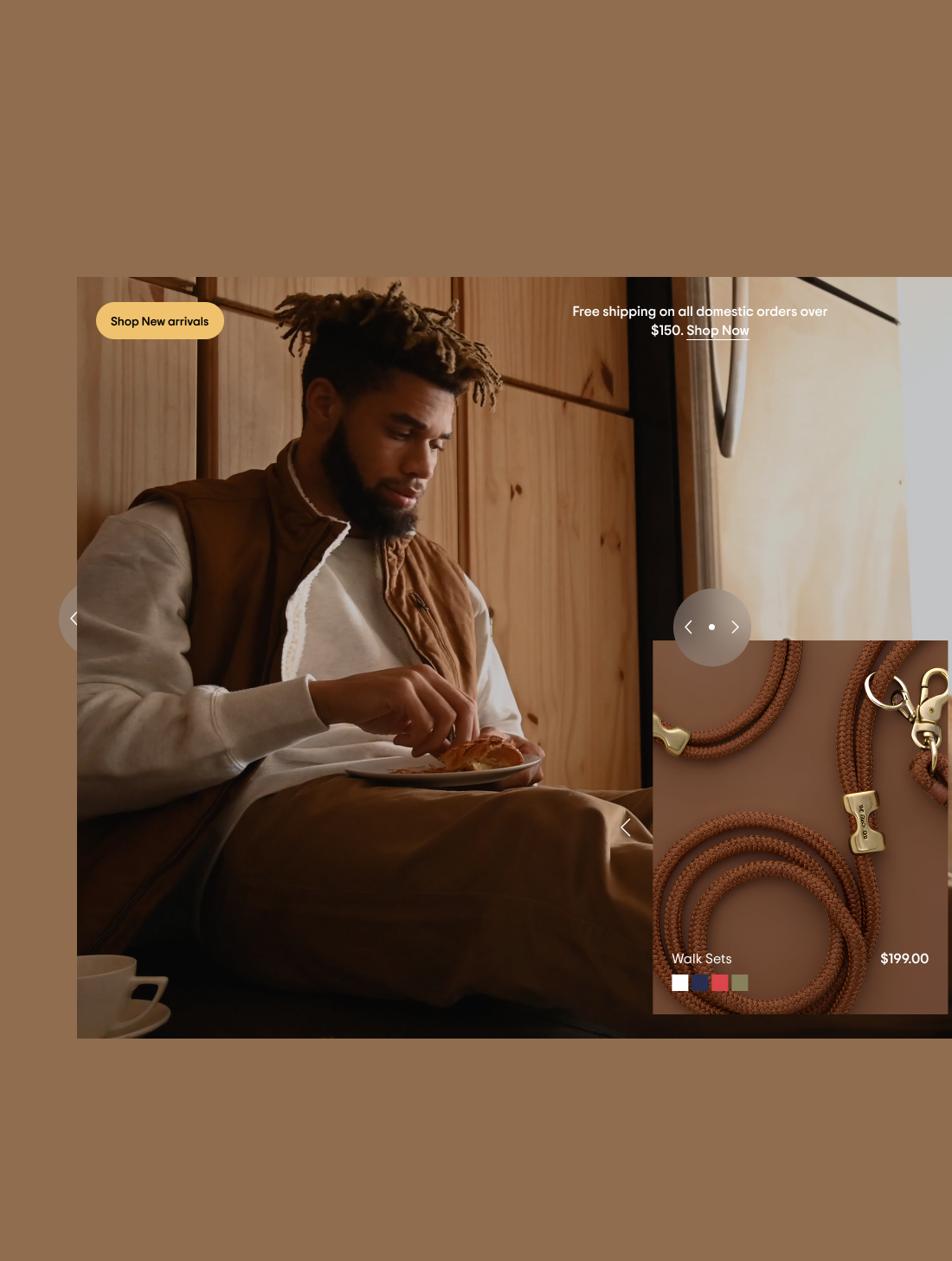
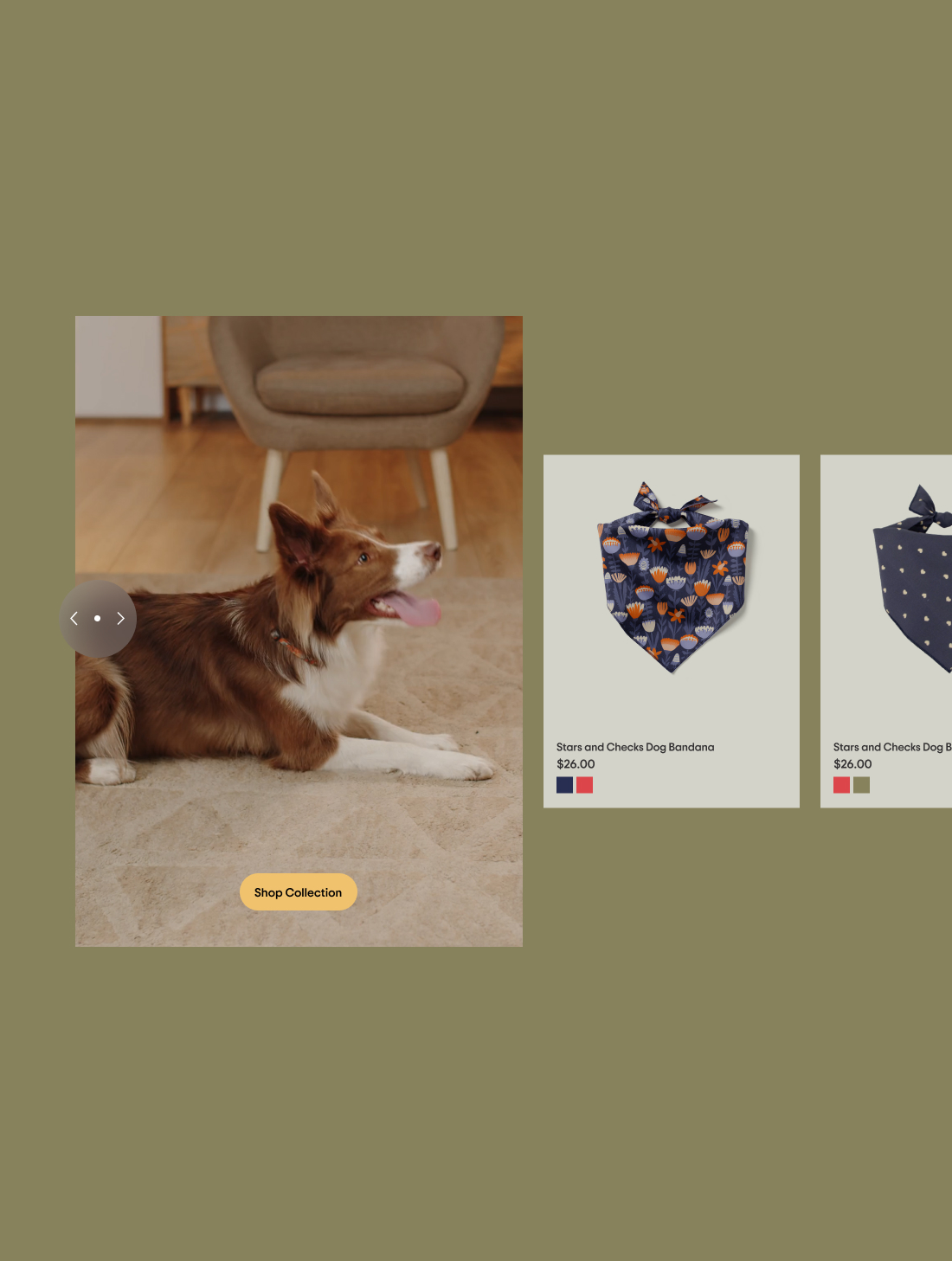
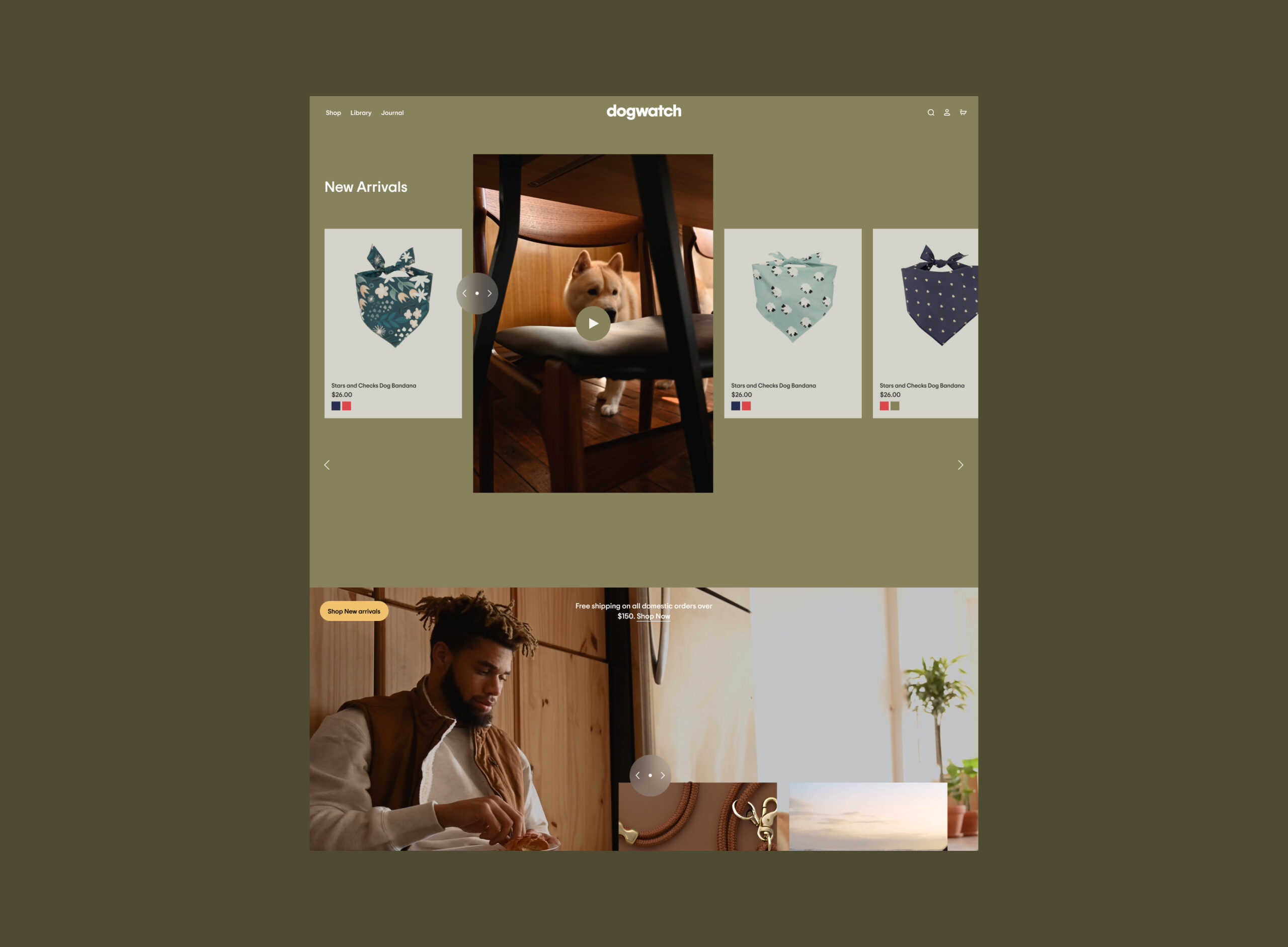
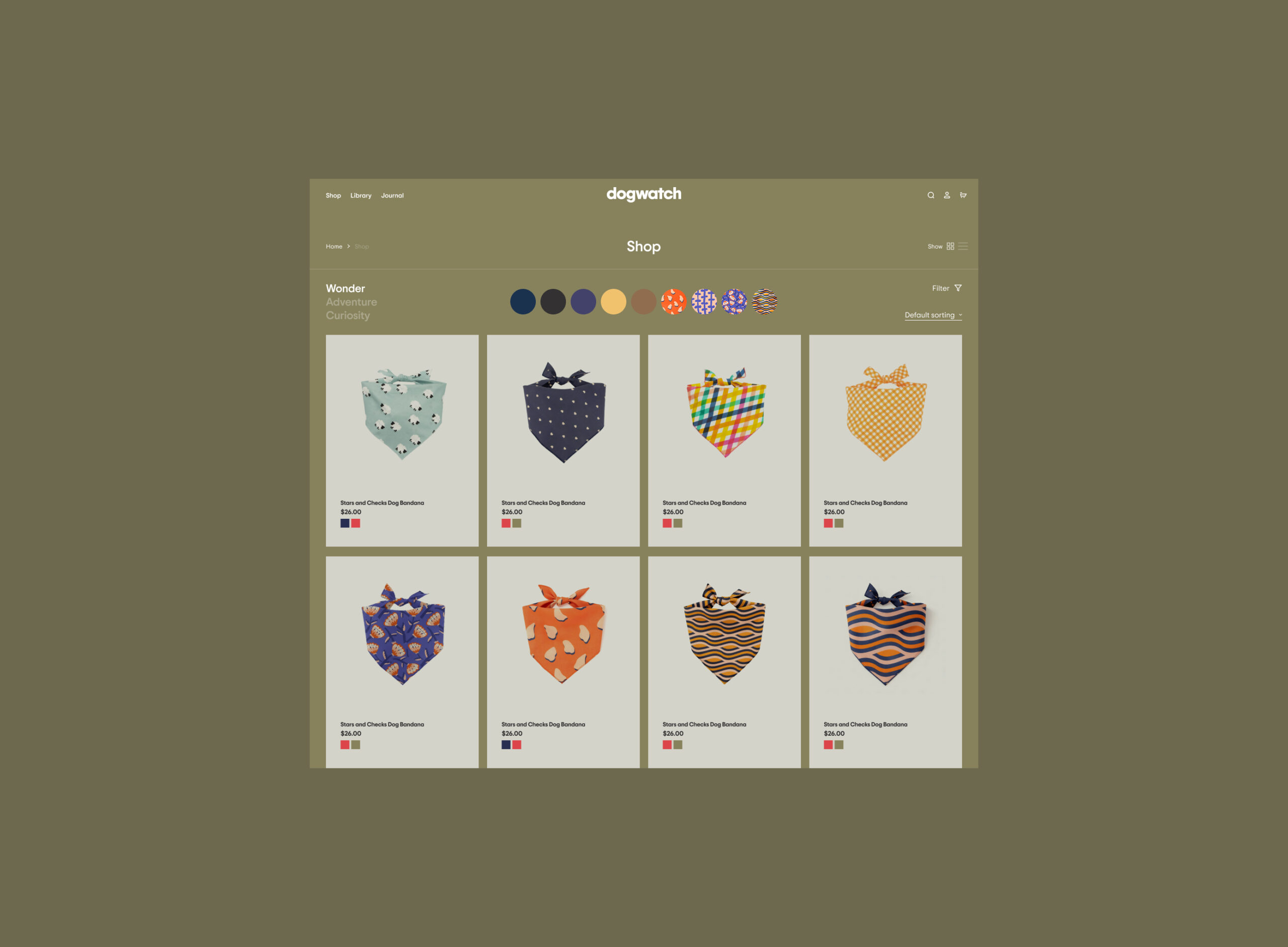
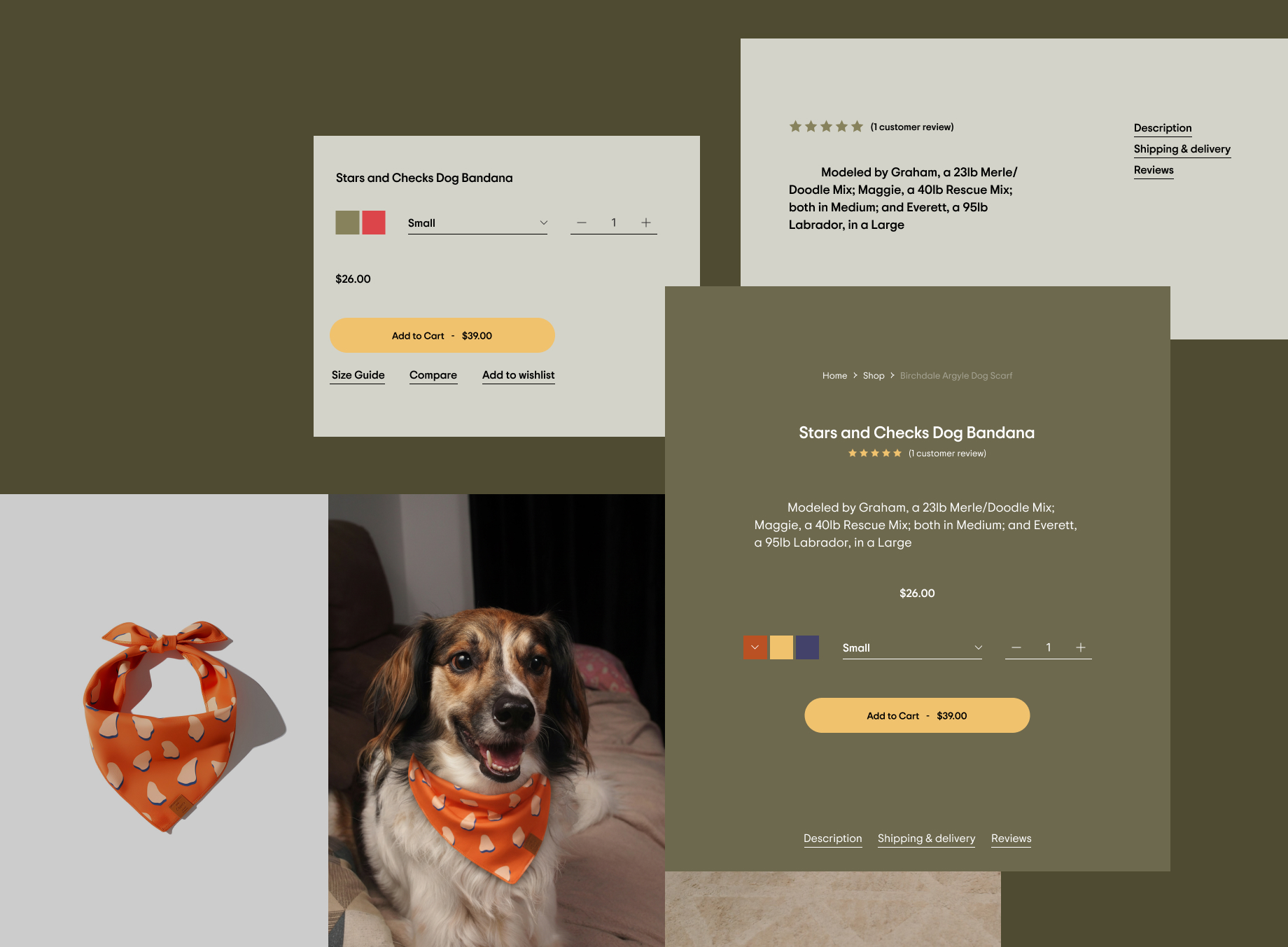
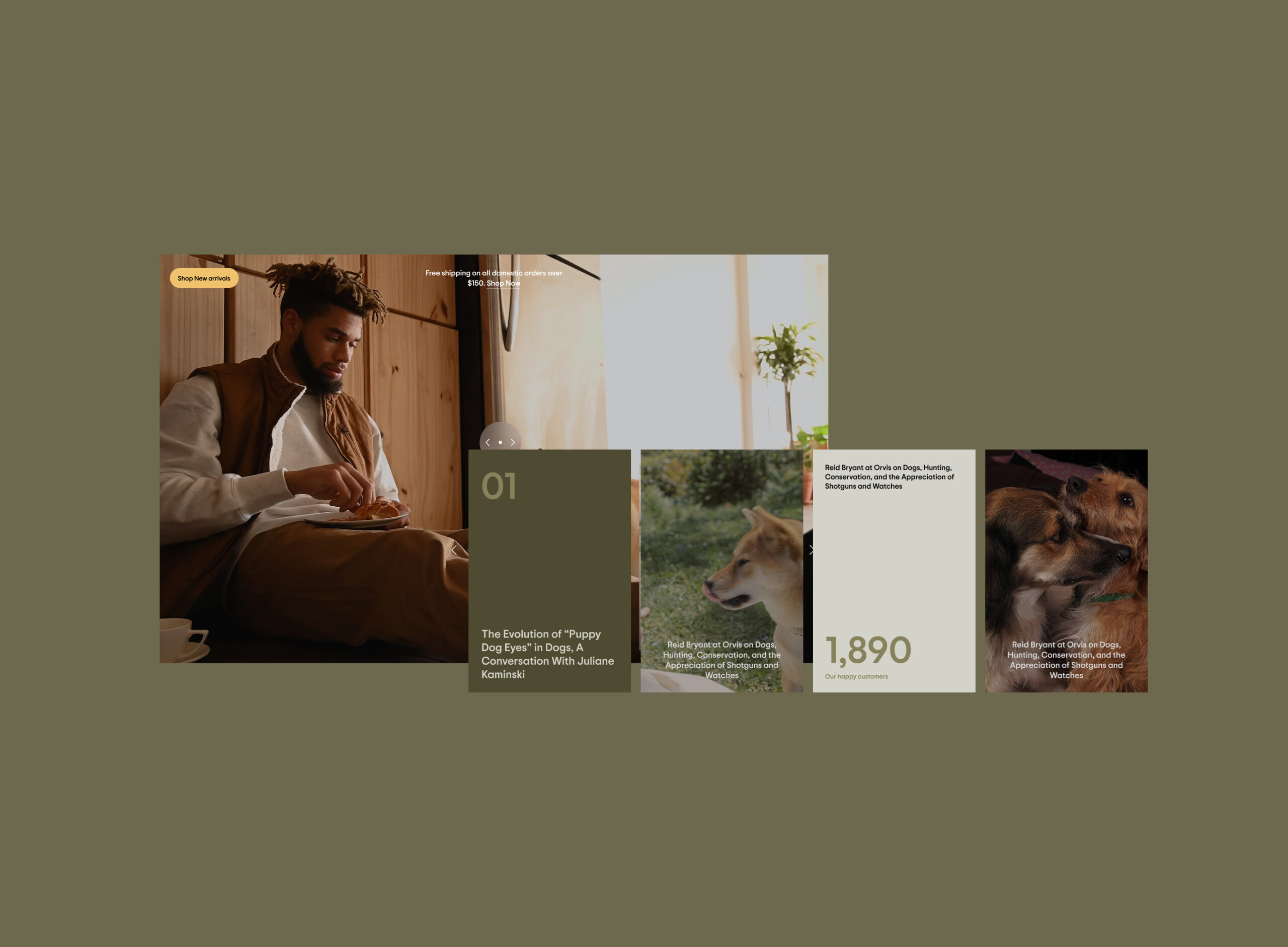
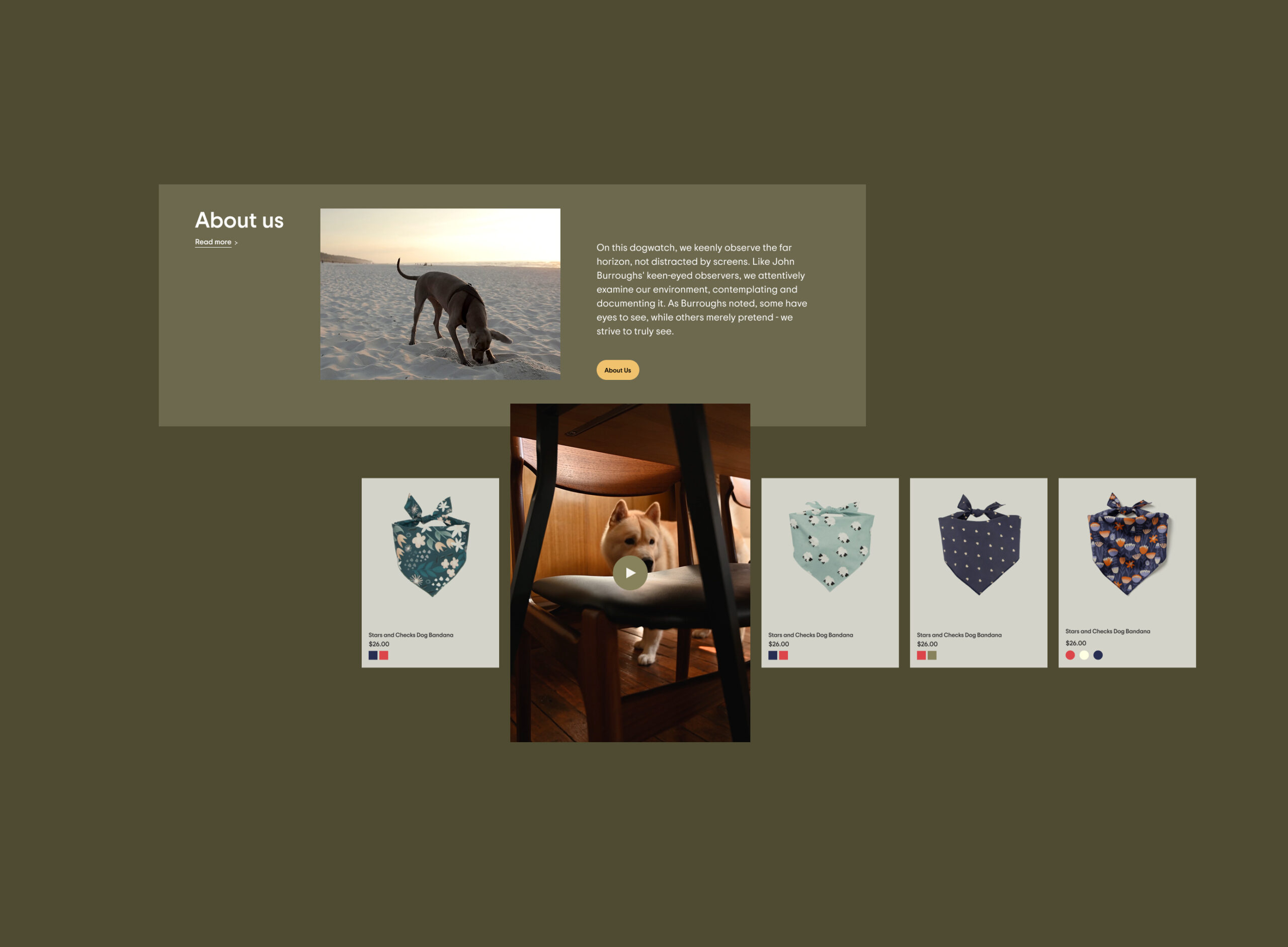
As Senior Product Lead, I led the full redesign strategy end to end. I developed two different PDP versions for structured A/B testing and built a modular system with four reusable cross-blocks designed for future removal or swapping without full redesign. I restructured the homepage for guided discovery, optimized the catalog grid for faster scanning, elevated the visual hierarchy to shift the brand into a luxury tier, integrated video directly into the commerce flow, and embedded a clear conversion and testing logic into the architecture.
potential PDP conversion rate lift
projected bounce rate reduction
deeper product interaction (color and variant engagement)
Key decisions
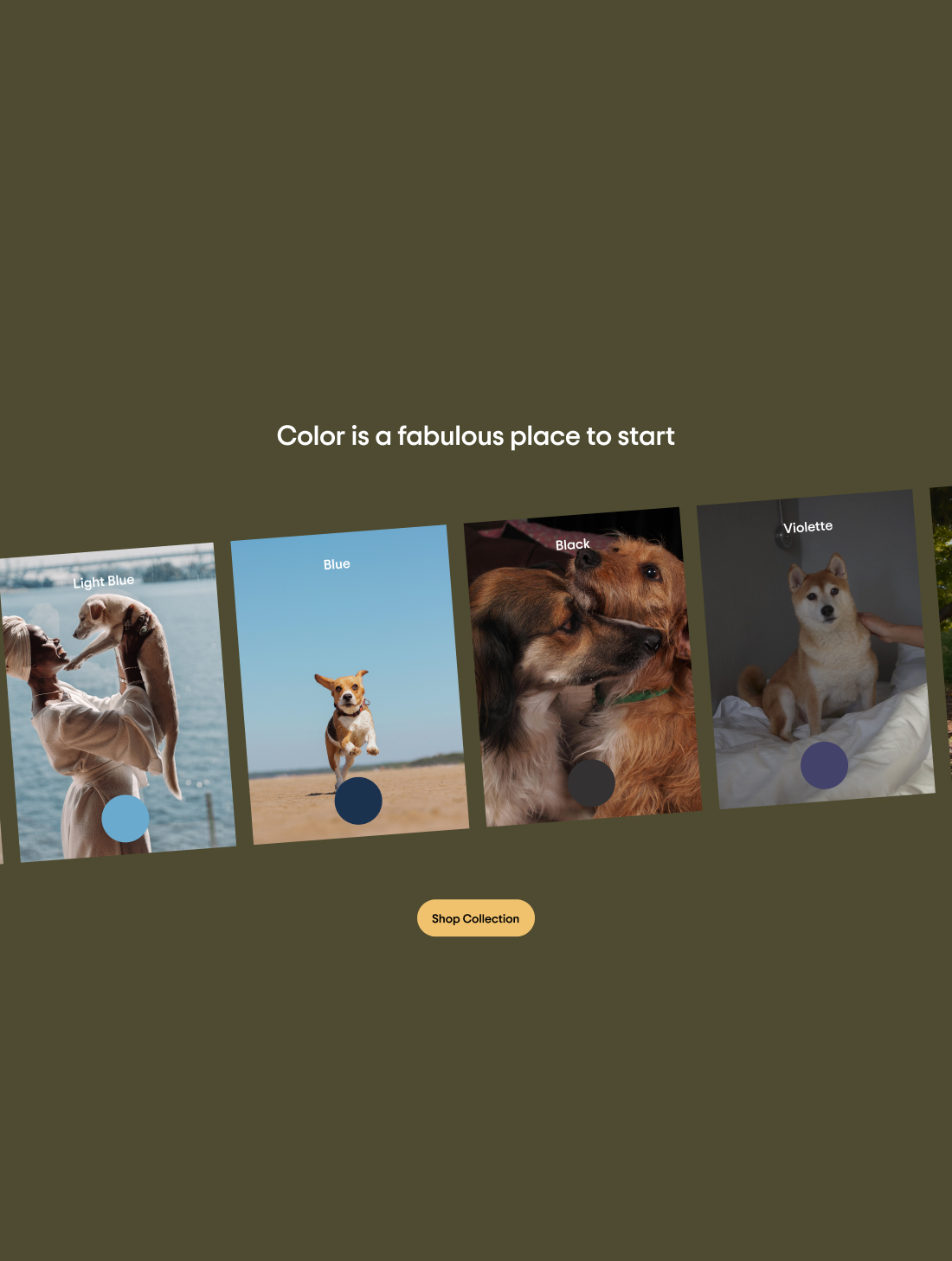
I started from the assumption that most traffic would land directly on the PDP, so the architecture was built around that entry point. I designed two separate PDP layouts to test narrative-led versus product-focused conversion logic. I implemented four modular sections that can be removed or re-ordered to simplify future testing cycles. The catalog and color selection logic were simplified to reduce cognitive load, while visual structure and spacing were refined to increase perceived value. The overall shift moved the brand from lifestyle aesthetic to structured luxury commerce.
Outcome
Based on structural improvements and similar commerce benchmarks, the redesign could drive a projected 15 to 25 percent lift in PDP conversion rate and a 10 to 18 percent reduction in bounce rate. Deeper product interaction, especially around color and variants, could increase by approximately 20 percent. Stronger luxury perception and improved hierarchy may support a 5 to 10 percent increase in average order value over time. The store is now modular, testable, and scalable, designed not only to look refined but to support continuous optimization.